How To Stay Motivated During Banking Exam Preparation


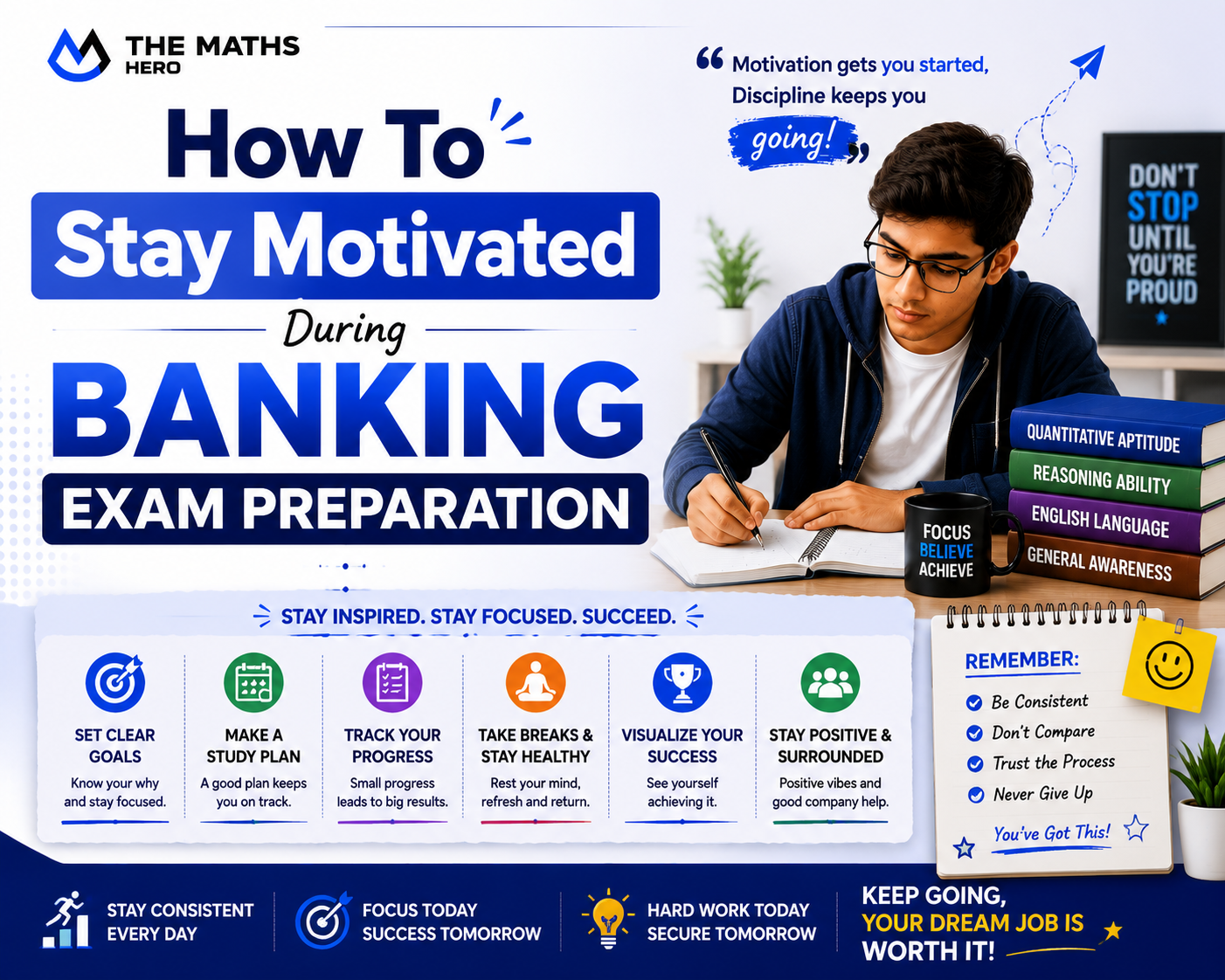
Starting on the path to banking exams is initially thrilling; however, maintaining motivation over the entire duration can prove challenging. As the curriculum expands and the intensity of the exams starts building, it’s perfectly normal to encounter periods of uncertainty and fatigue. The encouraging aspect is that success isn’t dependent on feeling energised daily; rather, it relies on maintaining regularity even when that initial spark of motivation goes away. So, stay tuned to find the answers to your questions at The MathsHero.
Have A Clear Reason For Your Preparation
Before starting your bank exam preparation, consider carefully why you desire a career in banking. Is it for job security, financial independence, professional growth, or the chance to enter a respected field?
Your motivation serves as your primary reason during challenging times. Whenever you experience a slip in morale, just remind yourself of the long-term objective. Candidates who have a different purpose tend to maintain their focus for extended hours compared to those who prepare just because it’s a common pursuit.
Write your goal on a piece of paper and place it near your desk. Seeing it daily can reinforce your commitment.
Set A Realistic Daily & Weekly Goals
Many students create ambitious study plans that are impossible to follow consistently. When they are unable to meet these targets, dissatisfaction arises. This can be a problem if you do this for SBI PO, IBPS, or RBI exams.
Rather than concentrating only on the final exam, break your preparation into more manageable, attainable objectives. For example:
- Complete 1 chapter of Quantitative Aptitude today.
- Solve 30 reasoning questions.
- Revise current affairs for the week.
- Attempt one mock test every Sunday, once you have completed the course.
Focus On Consistency Rather Than Perfection
A significant number of aspiring candidates hold the belief that dedicating 10 – 12 hours daily is the requirement for success. While tireless effort is important, regularity is more necessary than occasional periods of intense study.
On certain days, you might dedicate 8 hours to studying, whereas on others, you may only manage 4. This is entirely acceptable. The key is to sustain the practice of regular study.
Avoid Comparing Yourself With Others
In our current digital era, students are continuously overwhelmed with preparation strategies, success narratives, and study-related updates via social media. While some of this material can be motivational, excessive comparison can prove damaging.
You might encounter individuals who say they answer hundreds of questions daily or complete multiple practice tests weekly. Instead of feeling discouraged, keep in mind that each candidate has a unique learning speed, background, and timetable.
Celebrate Small Wins
Your drive increases when it’s visible how far you have advanced. Did you boost your mock test score by 5 points? Mark the achievement. Did a challenging concept in Logical Reasoning or Quantitative Aptitude finally click? Give yourself credit.
Small wins serve as reminders that your hard work is yielding results. They create positive momentum and make the preparation journey more enjoyable.
Use Mock Tests As Learning Tools
A considerable number of students experience a drop in motivation following disappointing mock test performances. However, these mock tests are meant to highlight areas of deficit, not to judge your potential.
A low score today doesn’t determine your final result. Rather than feeling discouraged, analyse your mistakes and learn from them. To do this, you can ask yourself:
- Which section took the most time?
- What types of questions caused difficulty?
- Were the mistakes due to a lack of knowledge or carelessness?
Create A Positive Study Environment
The environment around you substantially influences your drive. An untidy, loud, or disruptive setting can impair concentration and efficiency. Endeavour to establish a learning area that is tidy, orderly, and conducive to comfort.
Ensure your study resources are at hand and reduce hindrances like superfluous phone alerts. A designated study zone helps your mind in linking that location with studying and focused attention.
How The MathsHero Helps Aspirants In Bank Exam Preparation?
At The MathsHero, we understand that preparing for banking exams involves more than simply getting through the course material. It’s about maintaining drive, regularity, and confidence during the entire process. From becoming proficient in Quantitative Aptitude to mastering every mock test, The MathsHero offers the guidance and confidence individuals require to remain focused. In the end, we are dedicated to helping you maintain concentration and advance toward your ambition of a banking career.
Start Your Banking Journey Today, Mastering Quantitative Aptitude At theMathsHero!
The Final Word
Preparing for your banking tests is a journey packed with challenges, chances to learn, and personal advancement. You’ll encounter periods of enthusiasm and periods of uncertainty. The crucial aspect is your commitment to your objective, even when facing temporary difficulties.
While inspiration might prompt you to begin, it’s regularity, self-control, and confidence in yourself that pave the way to achievement. Concentrate on making gradual improvements, acknowledge minor victories, draw lessons from errors, and have faith in the unfolding path. And if you need any help with this, you can always connect with The MathsHero.
FAQs
Q) Why do banking aspirants lose motivation during preparation?
Ans) Preparing for mock tests can be an extended undertaking, requiring an extensive curriculum, regular exercise, and numerous practice exams. As test stress intensifies, many aspirants encounter exhaustion, insecurity, and a brief decline in drive.
Q) How can I stay motivated while preparing for banking exams?
Ans) Having a well-defined objective, devising feasible study schedules, monitoring advancement, acknowledging minor successes, and adhering to a steady study regimen can assist you in remaining driven throughout your entire preparation phase.
Q) Why should I set daily and weekly study goals?
Ans) Breaking your preparation into more concise, attainable targets makes the journey less daunting. It also assists in monitoring your advancement and sustaining motivation across the duration.
Q) What can I do to reduce distractions while studying?
Ans) Keep your study materials organised, silence unnecessary phone notifications, avoid multitasking, and create a dedicated study space that encourages focus.
Recommended for you

Self-Study vs Online Coaching for Bank Exams: What Works Better in 2026?

Banking Quantitative Aptitude by Ashish Arora: Key Topics in Quantitative Aptitude for Bank Exams