Smart Study Techniques For Competitive Exams

16th June 2026

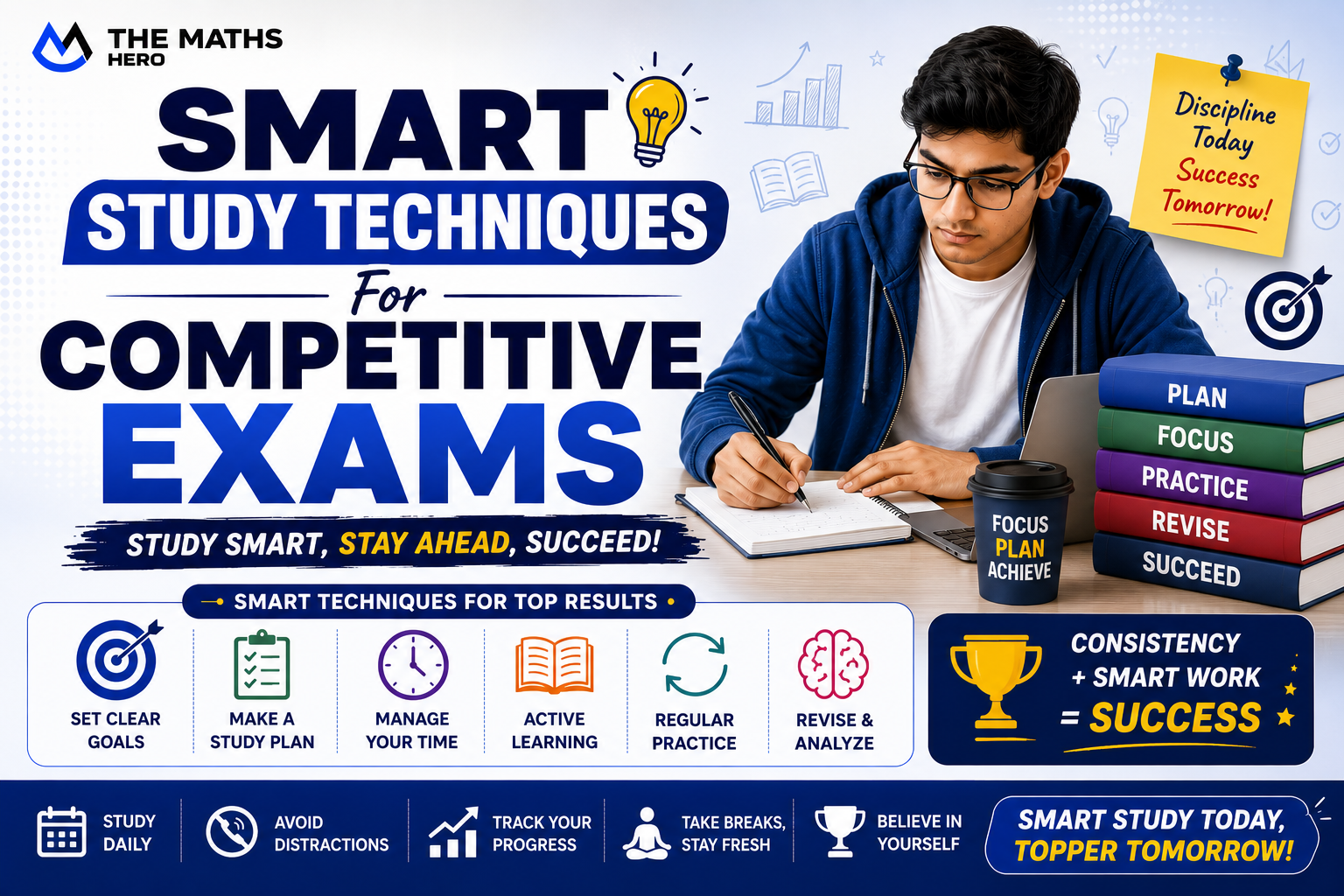
Preparing for competitive exams can feel overwhelming. Whether you are aiming for public sector jobs, engineering admissions, medical school admissions, banking exams, or any other competitive tests, the pressure to perform well is often high. A common belief among aspirants is that extended study periods are the pathway to success. However, success is not just about studying harder – it’s about studying smarter. To master competitive exams, here are some of the smart study techniques to do so.
Set Clear & Realistic Goals
Before going into the study material, determine what you aim to accomplish within each study period. For example, rather than stating, “I will study Mathematics today,” establish a concrete objective such as, “I will finish three sections of Algebra and complete 20 practice problems.”
Dividing substantial objectives into more manageable steps makes studying less daunting and helps you track your progress. Accomplishing small targets also boosts motivation and confidence.
Create A Study Schedule
A carefully planned schedule assists learners in maintaining order and averting final-minute distress. Segment your day into study blocks and assign time to various subjects according to their challenge and significance. While making a study schedule, remember:
- Prioritise difficult subjects during your most productive hours.
- Include short breaks between study sessions.
- Keep time for revision and practice tests.
- Avoid unrealistic plans that are impossible to follow.
Take The Help From Active Learning Techniques
Various aspirants devote considerable time to re-reading textbooks but retain minimal information. Passive reading is often less effective than active learning. Active learning requires engaging with the material. Some effective techniques include:
- Taking notes in your own words.
- Explaining concepts aloud as if teaching someone else.
- Creating mind maps and flowcharts.
- Solving questions immediately after learning a topic.
Practice The Art of Revision
Review is an absolutely crucial element of exam readiness. Regrettably, many learners continue to absorb new material but rarely revise the old one. Without revisiting, even concepts thoroughly understood can fade away from memory over time. A simple strategy looks like this:
- Revise a topic on the same day you study it.
- Revise again after one week.
- Conduct a final revision before the exam.
Solve Previous Year Question Papers
Previous year question papers offer priceless understanding into test formats, recurrent themes, and levels of difficulty. The benefits of solving the previous year’s question paper include:
- Understand the exam structure
- Improving time management skills.
- Identifying weak areas.
- Building confidence for the actual exam.
Take Mock Tests Regularly
Practice examinations serve as powerful tools for preparing for competitive exams. They enable aspirants to evaluate their present performance and highlight areas that require more work. After every mock test, it is important to:
- Analyse your mistakes carefully.
- Understand why you got questions wrong.
- Focus on improving weak topics.
- Track your progress over time.
Focus On Understanding, Not Memorisation
Many competitive examinations assess an understanding of underlying principles rather than mere memorisation. Students who grasp the reasoning behind concepts often excel compared to those who depend solely on memorisation.
Whenever you study a subject, pose this question to yourself:
- Why does this happen?
- How does this concept work?
- Where can it be applied?
The MathsHero: Helping Aspirants To Master Competitive Exams With Smart Study Techniques
At The MathsHero, we think succeeding in competitive tests stems from a more intelligent approach to learning, rather than just putting in more effort. Our method, led by specialists, assists students in gaining proficiency in clever study approaches. This includes defining objectives, creating organised learning plans, employing engaging learning practices, developing efficient review techniques, and consistently taking practice exams. We aim to foster an in-depth understanding of concepts, moving away from mere memorisation, so candidates can face their exams with self-assurance and precision.
Join The MathsHero today and transform your exam preparation with smart strategies that deliver real results!
The Final Word
Excelling in competitive tests hinges not on prolonged study periods, but rather on the quality of your preparation. Intelligent study methods aid learners in grasping material swiftly, preserving it durably, and approaching exams with assurance.
Bear in mind, these competitive assessments aren’t merely measures of what you know; they gauge your self-control, tactical planning, and steadfastness. Adopting the correct strategy and maintaining an optimistic outlook allows any student to advance toward realising their aspirations.
FAQs
Q) Why is studying smarter more important than studying longer?
Ans) Studying smarter focuses on efficiency and understanding, helping students learn more effectively in less time rather than relying solely on long study hours.
Q) How can setting clear goals improve exam preparation?
Ans) Clear and realistic goals provide direction, make large tasks manageable, help track progress, and increase motivation through achievable milestones.
Q) How often should I revise topics for competitive exams?
Ans) An effective revision strategy includes reviewing a topic on the same day it is learned, revisiting it after a week, and conducting a final revision before the exam.
Q) What should I do after taking a mock test?
Ans) After a mock test, analyse mistakes, understand the reasons behind incorrect answers, focus on weak areas, and adjust your study plan accordingly.
Recommended for you

Self-Study vs Online Coaching for Bank Exams: What Works Better in 2026?

Banking Quantitative Aptitude by Ashish Arora: Key Topics in Quantitative Aptitude for Bank Exams